
Shadow Oracle Cards
Draw from 30 visual metaphor cards. Each image opens a doorway for honest self-reflection. Embeddable domain-locked widget, mobile-responsive.
Add this widget to your site
Free forever. Copy the snippet and paste it into any page — no coding required.
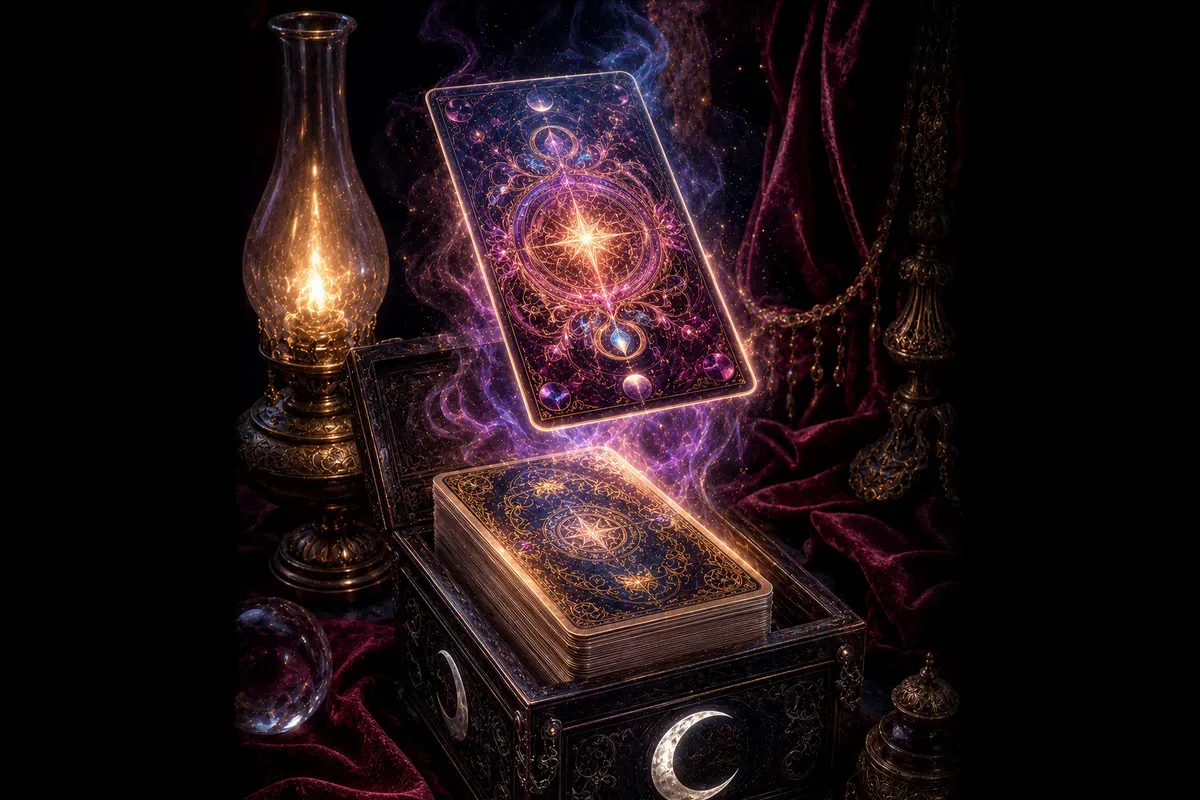
Endora oracle cards take their name and aesthetic from the figure of the witch-seer - the one who knows without being told, who sees through pretense, and who delivers her reading without softening it into something palatable. This deck doesn't comfort by default. It clarifies. The cards are drawn from a tradition of direct, witchcraft-adjacent oracle practice that values accuracy over reassurance, and that treats the querent as someone capable of handling what the cards actually say.
How it works
Set your question or situation clearly before drawing. The Endora deck works best with genuine questions, not hypotheticals. Draw one card for a direct response, three for a fuller picture of the situation. The reading interprets each card within this deck's specific symbolic vocabulary - which is darker, more direct, and less softened than angel card or affirmation-style oracle systems.
Understanding your result
The Endora deck's cards address the full spectrum of what people actually deal with: deception, difficult choices, necessary endings, the people in your life who don't have your best interests in mind, the parts of a situation that are more complicated than they appear, and also - when things are genuinely good - the particular quality of that good. The readings don't locate blame or make moral judgments. They describe conditions. What you do with the description is yours.
Frequently asked questions
Is this a 'dark' oracle? Should I be worried?
It's a direct oracle, not a dark one. It addresses difficult situations directly rather than softening them. If you're in a situation that's genuinely complicated, a reading that acknowledges that complexity is more useful than one that reassures you everything is fine.
Can I use this for positive questions, or only difficult ones?
Both. The deck reads positive situations as clearly as difficult ones - it just doesn't oversell either. A reading that says something is genuinely moving in a good direction is as accurate as one that describes resistance.
Is this connected to any specific magical tradition?
The aesthetic and approach draw from folk witch tradition and European cunning-woman practice rather than from any specific contemporary magical system. It's in the tradition of the practical oracle, not the ceremonial one.
Is this for entertainment?
Yes - and for self-reflection. We don't make predictive claims or represent this as magical consultation.