
Temple Fortune Sticks
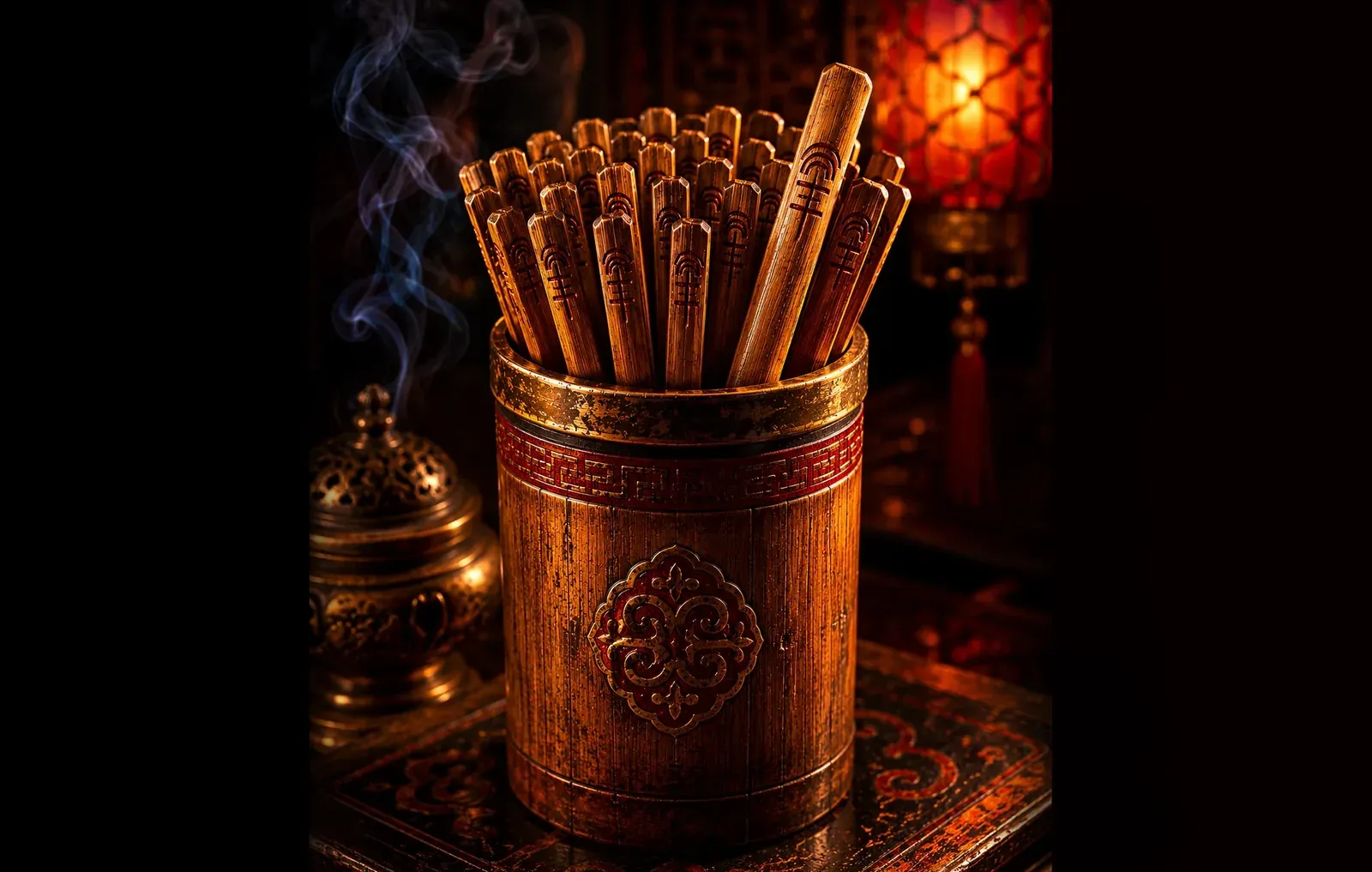
Shake the temple cup and draw your fortune stick online, free. An ancient Kau Cim oracle answers your question with one stick a. Embeddable domain-locked widget, mobile-responsive.
Add this widget to your site
Free forever. Copy the snippet and paste it into any page — no coding required.
Kau cim - fortune sticks - is one of the most widely practiced forms of divination in Asia. Worshippers visit temples across China, Taiwan, and Southeast Asia, kneel before the altar, shake a cylindrical container of numbered bamboo sticks until one falls out, and take the number to a monk or a printed interpretation chart. The system traces to the Song Dynasty but is practiced continuously to the present. Each of the 100 numbered sticks corresponds to a poem - classical Chinese verse that encodes wisdom about the situation being asked about.
How it works
Hold your question in mind. Click to shake the fortune sticks. One stick falls - its number is shown, and the oracle reveals the traditional poem and interpretation for that number. The interpretation draws from the classical Kau cim tradition: it may be auspicious, cautionary, or somewhere in between, and it describes the energy and likely direction of the situation you've asked about.
Understanding your result
The 100 sticks are grouped into categories by the fortune they traditionally carry: highly auspicious (sticks 1, 56, 88 are classic examples of sticks that predict clarity, success, and full movement); moderately auspicious (the majority of sticks, describing situations that proceed with effort, right timing, or patience); cautionary (sticks that warn of obstacles, timing misalignment, or the need to wait); and difficult (sticks that honestly describe a challenging period with a path through it). The poem attached to your stick is not literal - it describes the energetic quality of the moment through classical imagery: mountains, rivers, seasons, court officials, returning travelers. The interpretation unpacks those images into plain language.
Frequently asked questions
What temples use Kau cim traditionally?
The practice is associated with many Taoist and Buddhist temples throughout China, Hong Kong, Taiwan, Singapore, and across Southeast Asia. Famous locations include the Wong Tai Sin Temple in Hong Kong and Lungshan Temple in Taiwan. The sticks and poems can vary slightly by temple tradition.
Are there really 100 sticks?
The traditional Kau cim set has 100 sticks, numbered 1-100. Each corresponds to one of 100 traditional poems. Some temple sets use 78 sticks; 100 is the classical standard.
Can I ask any kind of question?
The tradition is most commonly used for significant decisions: marriage, business, travel, health (symbolically, not as medical guidance). Any genuine question works, but the practice is designed for things that matter to you.
Is this for entertainment?
It's offered as a digital version of a living divination practice. We present it with respect for the tradition and don't make predictive claims about outcomes.